

How to Tie the Butterfly Hank (With Button)
Usage
The Butterfly Hank (With Button) is how you store a length of cord so it stays tangle-free and lets you pull off only what you need. You wind the cord into a compact figure-8 bundle in your hand, then lock it with a small pull-through toggle — the “button” — made from the cord’s own end. No elastic band, no clip, no separate tie. When you need cord, you pull the button, feed out a few feet, and cinch the rest back down.
It’s a bushcraft favourite for paracord, guy lines, and any spare cordage you carry in a pack or pocket. The alternate name, the “Tightening Hank,” describes exactly what the button does: it tightens the remaining coil back down wherever you stop.
Why Learn the Butterfly Hank (With Button)?
Most people already coil cord in some figure-8 pattern — that part is old, widespread folk knowledge. The piece that makes this technique worth learning is the button lock. It turns a loose coil into a bundle you can actually carry, and then meter out a little at a time without unravelling the whole thing or ending up with a bird’s nest.
Because the lock is made from the cord itself, you always have it — nothing extra to lose or forget, which makes it a genuine everyday-carry skill.
Common Uses
This is a storage and dispensing technique, so its uses all come back to keeping cord tidy and ready:
Camping and Bushcraft
- Store guy lines, tarp cord, and spare paracord in a neat, packable bundle.
- Deploy a partial length of cord for a quick job, then tighten the rest back down without unravelling the whole hank.
- Keep a short working length — say 6 ft (1.8 m) — coiled in a pocket for miscellaneous camp needs.
Everyday Utility
- Bundle any household or workshop line and pull off only small amounts at a time.
- Keep cordage or light rope from tangling in a drawer or a pack.
Other Names
Category
|
Notable Features
- Meter it out: pull out however much cord you need, then tighten the bundle back down at that point.
- Tangle-free: the figure-8 wind pays out cleanly instead of knotting on itself.
- Self-locking: the button toggle secures the coil with no band, clip, or separate tie.
🪢 Myth-bust: “The Butterfly Hank is a kind of Alpine Butterfly knot”
Not so. The Alpine Butterfly knot is a load-bearing loop tied in the middle of a rope for clipping into; the decorative “butterfly knots” in old knot books are flat lanyard medallions. The Butterfly Hank shares only the word — its “butterfly” is just the figure-8 shape of the coil. It is a way to store cord, not a knot you put under load.
Similar Knots
There is a close cousin taught in UK bushcraft circles: a figure-8 coil finished with a self-cord cinch knot instead of a pull-through button — loosen the cinch to feed cord out, then snug it again to hold the rest.
Alpine Coil vs. Butterfly Hank
- The Alpine Coil is another tidy, self-locking way to store a length of cord on the same principle, but it locks the whole coil at once rather than paying cord out button by button.
Paracord Wrap (Short Hank) vs. Butterfly Hank
- The Paracord Wrap (Short Hank) wraps and self-locks the same way for short lengths, where the Butterfly Hank with Button pays out on demand from a captured button.
Security Level
This is a storage technique, not a load-bearing knot, so there is no strength or safety rating to give — the only thing the button holds is the coil itself, and on supple cord it does that well.
Downsides
- Stiff rope fights it: the button lock needs cord that holds its own bundled tension, so stiff or springy rope tends to spring the coil open.
- The button must be shown: the figure-8 wind is easy, but the locking button is not obvious — most people need to watch it done once or twice to catch the detail.
Structure
The Butterfly Hank is a figure-8 (crossing-turn) coil wound in the hand, locked by a bight of the working end pulled through the bundle to form a toggle. Pulling that toggle free releases the coil so cord pays out from the loose end; re-seating it re-secures whatever is left. It is the same self-cord end-lock logic recorded in The Ashley Book of Knots back in 1944 — there, a stiff wire buttoner does the job this technique does with a loop of the cord itself.
History
The Butterfly Hank is not a classical named knot — you will not find it in the old knot bibles, because it is passed hand to hand through bushcraft instructors rather than looked up by name. The community credits it to Mors Kochanski, the Canadian wilderness-skills educator, with Kelly Harlton of Karamat Wilderness Ways as the demonstrator who put it on video. The figure-8 wind itself is much older; the button lock is the part that makes it click.
How to Tie the Butterfly Hank (With Button)

Step 1
Wind the cord into a figure-8 / butterfly pattern across your hand, adding crossing turns as you go. Keep the turns even so the bundle sits flat.
Step 2
Once the hank is the size you want, take the working end and form a bight — a loop — through the center of, or around, the bundled coils. This loop is the “button.”
Step 3
Pull the button snug so it locks the coil under its own tension. Done right, it holds the whole bundle with no band, clip, or extra tie.
Step 4
To deploy, pull the button loop free and feed cord out from the loose end — not the button end. Pay out what you need, then re-seat the button to tighten the remaining coil back down.
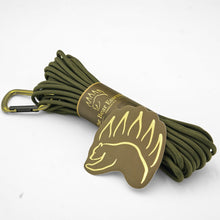
If the button is hard to follow from written steps, the Knot IQ app has this hank in full 3D — slow it down and orbit it until you can see exactly where the toggle tucks. And it is worth practising on the cord it is built for: a length of 750 lb bushcraft paracord is supple enough to hold the button cleanly.
FAQ
What is a butterfly hank used for?
Storing a length of cord — paracord, a guy line, spare cordage — in a compact, self-locking bundle you can carry in a pack or pocket, then pay out only as much as you need and tighten the rest back down without unravelling the whole coil.
How do you release a butterfly hank?
Pull the “button” loop free and feed cord out from the loose end — not the button end. Re-seat the button to re-secure whatever coil is left.
Does the butterfly hank work on stiff or thick rope?
It is designed for supple, paracord-weight cord. Stiff rope is the known weak spot — the bundle tends to spring open instead of holding the button lock. Whether it scales to thicker-but-supple rope is not well documented.
Who invented the butterfly hank?
It is credited in the bushcraft community to Mors Kochanski, with Kelly Harlton (Karamat Wilderness Ways) as the demonstrator who popularized it on video. The figure-8 wind itself is much older; the button lock is the part usually attributed to this lineage.
Important Notes on Safety
Always deploy the hank from the loose end, not the button end — pulling the button end defeats the lock and tangles the coil. And remember this is a way to store cord, not a load-bearing knot: never use the hank itself as an attachment for anything that bears weight.


