

How to Tie the Overhand Knot
Usage
The Overhand Knot is commonly used as a basic stopper knot to prevent rope ends from fraying or slipping through holes in scouts and bushcraft. It’s a simple and compact knot ideal for beginners, although it can jam under heavy loads.
Why Learn the Overhand Knot?
Its straightforward design makes it a versatile stopper. This knot is a must for anyone starting with rope work. It’s easy to tie, compact, and works well for various outdoor and utility tasks.
Common Uses
-
Scouts:
- Prevents rope ends from slipping through loops or holes.
- Serves as a safety knot to back up other knots.
-
Bushcraft:
- Secures cordage ends to prevent fraying in shelters.
- Acts as a stopper for gear ties or traps.
ABOK Number
(Ashley Book of Knots)
Other Names
Category
|
Notable Features
- Simple and Quick to Tie: Perfect for beginners and quick fixes.
- Compact: Fits in tight spaces as a stopper or safety knot.
- Versatile: Works for a wide range of tasks in scouting, bushcraft, and household use.
Variations
(No true variations listed in the provided data.)
Similar Knots
Double Overhand Stopper vs. Overhand Knot
- Pros: Bulkier and more secure for larger holes or loads.
- Cons: Harder to untie and uses more rope than the Overhand.
Standard Figure Eight vs. Overhand Knot
- Pros: Easier to untie after heavy loads and more decorative.
- Cons: More complex and bulkier than the simple Overhand.
History
The Overhand Knot, referenced in The Ashley Book of Knots (#515), is one of the oldest and simplest knots, likely used since humans began working with cordage. Its universal application as a stopper or safety knot made it a staple in scouting, bushcraft, and early maritime tasks. Its enduring use reflects its fundamental role in knot-tying traditions. It's also the structural root of a wide family of other knots — the Wikipedia entry on the Overhand Knot lists the simple noose, the overhand loop, the angler's loop, the reef knot, the fisherman's knot, the half hitch, and the water knot as forms built from it.
Security Level
The Overhand Knot provides reliable stopping power for light to moderate loads when tied correctly, effectively preventing rope ends from slipping or fraying. It performs best with textured ropes. For heavy loads or slick ropes, a bulkier stopper like the double overhand knot may be needed to ensure security. On genuinely slippery synthetic line, sailors and bushcrafters climb the ladder further still to the Stevedore Knot, which holds roughly twice the load a double overhand can before it starts to slip. A 2001 physics study (Pieranski et al.) traced the break to one exact spot every time — the point of highest curvature just inside the knot's entrance — which is the same tight nip this knot relies on to hold at all.
Downsides
- Jamming risk: Tightens under load, making it hard to untie.
- Limited strength: Less secure than bulkier stoppers for heavy loads.
- Name confusion: The similarly named Flat Overhand Bend joins two ropes together for rappelling — a different job, with much higher stakes, than stopping a single line end.
Structure
- Take the working end of the rope and form a small loop.
- Pass the working end through the loop.
- Pull both the working end and the standing line to tighten.
- Check that the knot is snug and compact.
Pro Tip: Ensure the loop is small to keep the knot tight and neat. Use a firm pull to set the knot, especially with slick ropes.
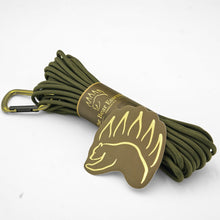
Under-setting is the single most common real-world mistake with this knot — it can look tied but isn't snugged fully, and it comes apart later without warning. The Knot IQ app's 3D animation lets you rotate the finished knot and check your own against it before you trust it with anything. Practice on a length of 750 lb bushcraft paracord — its texture makes it easy to see whether the loop has actually cinched down snug.
FAQ
Is the Overhand Knot strong enough for heavy ropes?
It’s reliable for light tasks, but use a Double Overhand or Figure Eight for heavier loads.
What’s the best rope for the Overhand Knot?
Nylon or polyester ropes with some texture work well for a secure grip.
How does the Overhand Knot compare to the Figure Eight?
The Overhand is simpler but jams more, while the Figure Eight is easier to untie.
Can the Overhand Knot be used in bushcraft?
Yes, it’s great for securing cordage ends or as a safety knot in shelters.
Why choose the Overhand Knot over a Double Overhand?
It’s quicker and uses less rope, ideal for small, simple stopper needs.
Important Notes on Safety
Common failure points include a loosely tied knot or using it for heavy loads, which can cause slipping or jamming. Always verify the knot is tight and suitable for the task. Check the rope for wear before tying. Ensure the knot is snug to prevent unintended loosening. Practice tying and untying in low-stakes settings first.
Don't confuse this knot with a Half Hitch — a half hitch only holds while it's wrapped around something else and spills off the end on its own, while the Overhand Knot stands alone in the rope and stays tied even with everything else removed.


