

How to Tie the Diamond Knot (Lanyard Knot)
Usage
The Diamond Knot puts a small, rounded, good-looking stopper on the end of a cord — a knife lanyard, a key fob, a zipper pull, or a bead on a paracord project. It's the knot behind that neat, symmetrical "diamond" bump you see finishing off a lot of EDC gear.
It's built by weaving a doubled cord into two interlocking loops, then leading both ends back up through the center and drawing them tight. That collapses the loose weave into a compact, four-faceted lump that's easy to grip and won't pull through a hole the way a plain overhand knot might.
Why Learn the Diamond Knot?
It's the standard finishing knot for a knife or marlinspike lanyard, and it looks like it took more skill than it did. Ashley's Book of Knots lists it under half a dozen different names — Marlingspike Lanyard Knot, Single-Strand Diamond Knot, Two-Strand Diamond Knot, Bosun's Whistle Knot — because sailors were tying this same knot for exactly this job long before paracord existed. Once you know the weave, it turns a plain key fob or zipper pull into something that looks finished.
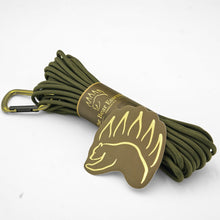
It's also the classic handle knot for a ferro rod striker or a fixed-blade knife — the rounded diamond gives cold or wet hands something solid to grab, which is exactly why it pairs so well with a striker like the Ferro Rod & Tungsten Striker Kit. A length of tough, supple 550-style cord like our Bushcraft Paracord is the natural material to weave one in — dense enough to dress into a clean bead, tough enough to take the daily handling of a striker or knife lanyard.
What it isn't is instant. Most tutorials break it into seven to twelve steps, and it takes both hands and a little patience to dress evenly the first few times. It's also worth knowing it can loosen up with repeated handling on slippery synthetic cord, so it's not a "tie it once and forget it" knot on nylon paracord the way it might be on stiffer natural-fiber line.
Common Uses
This is a decorative stopper knot, prized for its compact rounded shape and easy grip.
Everyday Carry
- Finishing a knife or marlinspike lanyard with a decorative, grippable stop
- Forming a compact bead or pull-tab on a key ring or zipper pull
Paracord & Craft
- Acting as a toggle, bead, or accent knot in paracord projects
- Standing in for a Monkey's Fist when a smaller, more evenly rounded bead is wanted
Other Names
Category
|
Notable Features
- Compact and evenly rounded. The finished knot sits as a small, symmetrical lump with four visible facets — smaller and rounder than a Monkey's Fist.
- Doubles as an anchor bead. Works well as a toggle or stopper for two-strand lanyards, keeping a cord from pulling back through a hole.
- Clean look for EDC gear. A go-to finishing knot for knife lanyards, key fobs, and zipper pulls where appearance matters.
- Easy to grip. The rounded shape makes a natural pull-tab, better to grab than a bare cord end.
Similar Knots
Monkey's Fist vs. Diamond Knot
- Advantage: the Monkey's Fist makes a bigger, more traditional ball, and it's the better pick when you want extra weight or a larger decorative accent.
- Disadvantage: the Monkey's Fist is bulkier and more angular; the Diamond Knot is smaller and more evenly rounded, which is exactly why some crafters tie it instead when a neater, more compact bead is the goal.
Ashley's Stopper Knot vs. Diamond Knot
- Advantage: Ashley's Stopper Knot is a simpler single-strand tie, faster to make when all you need is something to stop a cord from pulling through a hole.
- Disadvantage: it doesn't have the finished, decorative look of the Diamond Knot — on a visible lanyard or fob, the extra weaving pays off.
Stevedore Stopper vs. Diamond Knot
- Advantage: the Stevedore Stopper is quick and no-frills — tie it and move on when looks don't matter.
- Disadvantage: it's a plain functional stopper, not a knot anyone would call decorative; the Diamond Knot is the pick when the knot itself is meant to be seen and handled.
Security Level
In its usual job — finishing a lanyard, fob, or zipper pull — the Diamond Knot is light-duty, hand-tightened service, not load-bearing rigging, so there's no meaningful breaking-strength number to quote. For that everyday use it holds its shape well once dressed and drawn tight evenly. The one caution worth knowing: it can loosen up with repeated handling, especially on slippery synthetic cord like nylon paracord, so a lanyard that gets handled constantly may need an occasional re-snug.
Downsides
- Can look uneven if rushed. Drawing one end tight before the other pulls the finished shape lopsided instead of into its intended symmetrical form.
- Takes more steps than a basic stopper. Most tutorials use seven to twelve numbered steps — more involved than a quick overhand knot.
- Can loosen with handling. Repeated use, especially on slippery synthetic cord, can work the weave loose over time.
- Needs to be threaded first. The cord has to go through the tool hole, bead hole, or zipper pull before you tie the knot — tying it first and threading after doesn't work.
How to Tie the Diamond Knot
The weave is hard to read from a flat photo — the two loops cross over and under each other before they collapse into the finished bead. The Knot IQ app from Bear Essentials Outdoors turns the finished knot in 3D so you can follow each pass before you draw it tight.
Step 1
Thread your cord through whatever you're finishing off — the tool hole, zipper pull, or bead — before you start tying. Then form a bight in the cord and lay a loop with one end.
Step 2
Take the other end under and around the first loop to weave a Carrick Bend — the two loops should cross over and under each other, not just lie side by side.
Step 3
Pass one end around the outside of the bight and up through the center of the weave. Repeat with the other end, passing it around the outside and up through the center from the opposite side.
Step 4
Work any remaining slack through the weave evenly on both sides — pinching the two loose ends together and working slack through the body of the knot helps it come out even.
Step 5
Draw both ends tight at the same time so the knot collapses evenly into its compact, rounded shape. Trim or tuck the tails once you're happy with the finished size.
History
The Diamond Knot name actually covers two related but different knots. The older one is tied from a rope's own unlaid strands and goes back at least to 1769, when Falconer documented it for shipboard jobs like footropes and bell-ropes. The knot this page teaches — the doubled-cord version — is the one Ashley catalogued in his 1944 Book of Knots as "The Sailor's Knife Lanyard Knot," with a long list of his own aliases: Marlingspike Lanyard Knot, Single-Strand Diamond Knot, Two-Strand Diamond Knot, and Bosun's Whistle Knot. Hasluck's 1907 knotting manual independently describes the same kind of ornamental rope-end knot, so the credit belongs to generations of working sailors rather than any single inventor.
The name fits the job: sailors used it to finish off a knife or marlinspike lanyard with something decorative that wouldn't slip loose. That's still its main use today, just as often on paracord as on rope — key fobs, zipper pulls, and craft projects have taken over from ship's knives and bosun's whistles. It's also found a home well outside sailing: Eastern Christian prayer ropes use this same knot for their beads, a tradition credited by legend to Saint Anthony the Great.
FAQ
What do you use a Diamond Knot for?
Mostly as a finishing knot — on a knife or marlinspike lanyard, a key fob, or a zipper pull, where you want a compact, decorative stop that's easy to grip and won't pull back through a hole. It's also popular in paracord craft as a bead or toggle, and works as a smaller, more rounded substitute for a Monkey's Fist.
What's the difference between a single-strand and two-strand Diamond Knot?
They're both Ashley's own names for the same family of knot, just tied with one cord or two. The single-strand version uses one cord folded back on itself; the two-strand version uses two separate cords woven together, which makes a fuller, slightly larger finished knot.
How do you make a Double Diamond Knot?
You tie the regular Diamond Knot first, then lead both working ends back along the inside of their original path instead of trimming them — Ashley's own doubling instruction. It produces a bigger, more substantial version of the same knot.
Is the Diamond Knot strong enough to hold weight?
For its usual job — a lanyard, fob, or paracord bead — strength was never really the point; it's a light-duty, hand-tightened knot that holds its shape rather than a load. If you need a knot to carry real weight, use a purpose-built load-bearing knot instead.
Important Notes on Safety
Don't confuse this with the older rope-end Diamond Knot tied from a rope's own unlaid strands — that's a different knot built a different way, even though it shares the name. The knot on this page is woven from a separate doubled cord, not the rope's own strands.
Thread your cord through whatever you're attaching it to before you tie — a tool hole, zipper pull, or bead — since the knot has to be built around the object, not tied first and threaded on after. And if the finished knot sees a lot of handling, especially on smooth nylon paracord, check it now and then; it can work itself loose over time and may need a re-snug.


