

How to Tie the Lapp Knot (Bend Version)
Usage
The Lapp Knot is used to join two lines securely and with a quick-release function. It is often favoured for non-critical applications where ease of tying and untying is essential.
Why Learn the Lapp Knot?
The Lapp Knot offers a simple, quick, and reliable way to join ropes, particularly when a quick-release option is beneficial. Its non-jamming properties make it a convenient alternative to other bends.
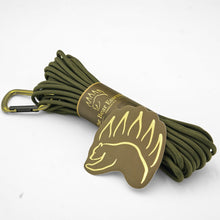
The fastest way to make it stick is repetition with real cord in hand — our Knot Tying Kit is built for exactly that kind of practice.
Common Uses
-
Camping:
- Temporary bindings for shelter and gear.
-
Boating and Marine:
- Joining lines for non-critical tasks.
-
General Utility:
- Binding objects securely with an easy release option.
ABOK Number
(Ashley Book of Knots)
Other Names
TypeBends
|
Notable Features
- Non-Jamming: Easy to untie even after loading.
- Quick Release: The slipped version can be undone instantly by pulling the tag end.
- Versatile: Can be used as a bend or a binding knot.
Variations
Slipped Lapp Knot vs. Standard Lapp Knot
- Slipped Lapp Knot: Offers a quick-release option.
- Standard Lapp Knot: More secure but harder to untie.
Similar Knots
Sheet Bend vs. The Lapp Knot
Read our full guide to the Sheet Bend for a closer look at this classic join.
- Pros: Common and well-known.
- Cons: Can slip if not dressed properly.
Bowline vs. The Lapp Knot
See how the Bowline compares in our step-by-step guide.
- Pros: Strong and secure.
- Cons: Bulkier and less quick to untie.
Eskimo Bowline vs. The Lapp Knot
Our guide to the Eskimo Bowline covers this close structural cousin.
- Pros: Provides a secure loop.
- Cons: More complex to tie.
History
The Lapp Knot has been used since 1892 and has gone by various names such as False Sheet Bend and Girdle Knot. It was commonly employed in Lapland (Northern Finland) for tying reindeer to sleds, highlighting its historical utility. Its documented naming history is summarised in the Lapp knot entry on Wikipedia.
Security Level
The Lapp Knot provides moderate security when tied correctly, with both tails on the same side ensuring maximum reliability. Knotspedia's Lapp Knot guide includes a photo diagram of this same-side tail check.
Downsides
- Can Slip: If not properly tied.
- Less Secure: Compared to other bends like the Double Fisherman’s Knot.
Structure
- Form a bight with one end of the rope.
- Pass the working end through the bight.
- Bring it over and under the standing part.
- Pull both ends to tighten securely.
Getting both tails on the same side is the part most people fumble — the Knot IQ app lets you rotate the knot in 3D and step through each pass slowly until the orientation clicks.
FAQ
What is the Lapp Knot used for?
It is used for joining two lines and for temporary bindings.
How does it compare to the Sheet Bend?
The Lapp Knot is more secure and easier to untie after being loaded.
Can it be untied easily?
Yes, especially in its slipped form, which releases quickly.
Is it suitable for load-bearing applications?
No, it should not be used for critical load-bearing purposes.
Important Notes on Safety
Always verify the correct tying technique to prevent accidental failure. Use only in non-critical applications or where quick-release functionality is needed.


